Bill Browder on Putin’s Russia
CBS. “The Russian regime is a criminal regime. We’re dealing with a nuclear country run by a bunch of Mafia crooks. And we have to know that.”
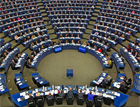 Parliament motions
Countries around the world have been passing motions, resolutions and laws in support of the visa ban and asset freeze initiative in order to punish the officials who played a role in the false arrest, torture and death of Magnitsky, as well as those who are covering up the crimes against him.
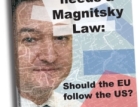 Why Europe Needs a Magnitsky Law
The widow and mother of late whistle-blowing lawyer Magnitsky along with 54 politicians, human rights activists and victims of human rights abuses are calling on politicians to implement Magnitsky Sanctions in Europe. Visit the book site
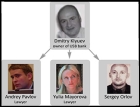 An organized criminal group
The false arrest, torture and murder of Sergei Magnitsky was arranged by the Klyuev Organized Crime Group after Sergei Magnitsky exposed the way it was systematically stealing from the Russian treasury.
 Crimes of the Klyuev Organized Crime Group
 Travel Records Showing the Cooperation Between Convicted Criminals and Russian Officials
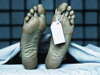 Dead Bodies left in the Wake of the Klyuev Organized Crime Group
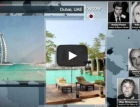 Russian Untouchables. E04: Organized Crime Inside the Russian Government
An organized criminal group within the Russian Government systematically steals hundreds of millions of dollars from the Russian people, kills Sergei Magnitsky, and is protected at the highest levels.
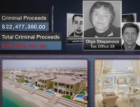 Russian Untouchables. E03: Olga Stepanova
See assets Stepanov's family now owns: Real Estate, offshore companies, bank accounts, travel. Compare it to their declared income. Applications filed to investigate tax officials' role in the $230mln theft and their illicit wealth.
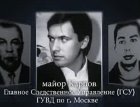 Russian Untouchables. E02: Major Pavel Karpov
Major Pavel Karpov worked together with Artem Kuznetsov in the theft of $230 million and repressive cases against Sergei Magnitsky. Afterwards, he buys over $1.3 million worth of property and goes on five star luxury holidays.
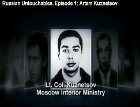 Russian Untouchables. E01: Lt. Col Artem Kuznetsov
Lt. Col. Artem Kuznetsov helps steal $230 million from the Russian Government, organizes the murder of Sergei Magnitsky, buys over $3 million in property, and travels the world in style.
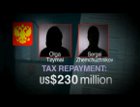 The Corruption Exposed by Sergei Magnitsky
Click to view video describing how Russian officials and their criminal accomplices stole $230 million – the story of crime and corruption exposed by Sergei Magnitsky.
 Sergei's Law
Magnitsky was tortured to death for exposing a $230mln theft from Russian people. His killers are protected by the Russian government. Watch video made by group of Russian&American students to see why the killers must be punished. Sign petition to support visa bans&asset freezes.
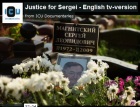 The death in prison of Sergei Magnitsky, a young Russian lawyer, remains one of the darkest scandals in the blotchy history of Russia's criminal justice system. One year on, this documentary brings the full details of his tragic story to light.
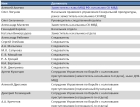 Cardin List
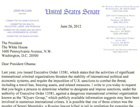 Senator John McCain's Letter
Senator McCain Calls Upon President Obama to Apply Aggressive New Sanctions Designed to Combat Terrorism to the Russian Organized Crime Group Who Murdered Sergei Magnitsky
Russian Government Cover up in Magnitsky Case in Persons and Documents
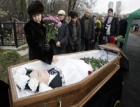 Magnitsky’s Torture and Murder Cover up
An explosive 75-page report with documents showing how Sergei Magnitsky was murdered in Russian Interior Ministry custody and how the Russian government has consistently lied in public about his false arrest, torture and death to cover up the criminal liability of the Russian officials involved
Magnitsky’s Torture and Murder Cover up
An explosive 75-page report with documents showing how Sergei Magnitsky was murdered in Russian Interior Ministry custody and how the Russian government has consistently lied in public about his false arrest, torture and death to cover up the criminal liability of the Russian officials involved
Expose of Russian Officials in Persons and Documents
 The aim is to expose the officials in the Russian government who concealed the criminal liability of those involved in Magnitsky’s torture and killing and the crimes he had uncovered, highlight available materials which reveal how the cover up is done, who is involved, and who contributes to it.
Deputy General Prosecutor Victor Grin
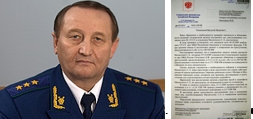
The first exposé of the new project features the role played by Russia’s Deputy General Prosecutor Victor Grin in the cover up of Sergei Magnitsky’s detention and death and in the cover up of the criminal conspiracy exposed by Sergei Magnitsky.
Judge Artur Karpov in Magnitsky, Navalny and Bolotnaya Cases
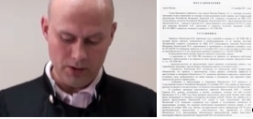
Moscow district judge Artur Karpov has refused complaints from Magnitsky’s mother seeking an investigation of her son’s torture and murder. He also sanctioned arrests of Bolotnaya square protesters and the house arrest of anti-corruption blogger Alexei Navalny. For more click here.
Latest news and blog posts
The Telegraph займ онлайн на карту без отказа займ срочно без отказов и проверок https://zp-pdl.com/get-a-next-business-day-payday-loan.php https://zp-pdl.com/get-quick-online-payday-loan-now.php займы без отказа быстрые кредиты с плохой кредитной историей credit-n.ru займ на карту сбербанка мгновенно вивус займы credit-n.ru займ на карту без отказа без (read more…)
EU Russia Centre. David Cameron’s visit to Moscow on 12 September will be the first by a British Prime Minister since that of Tony Blair in 2005.
Radio Free Europe. Russia’s monolithic secret services are back in the media spotlight. And once again, the reason has nothing to do with spying.
The Moscow News. Russian human rights activists and political opposition members have sent a new version of the controversial “Magnitsky list” to the U.S. Senate, proposing to include the names of 305 Russian officials connected to the Mikhail Khodorkovsky and Yukos case – but whether or not anything will come of this proposal remains to be seen.
The Moscow News. The head of Russia’s electoral commission has said he is privileged to be on a US visa blacklist over the death of lawyer Sergei Magnitsky, despite not actually being on the list.
Общественный контроль Вчера 23 ноября 2011 года подполковник Николай Будило был приглашен на встречу с Президентом РФ Медведевым для обсуждения механизмов борьбы с коррупцией. Подполковник Будило Н.Н. входит в список 60 российских чиновников (за номером 23), составленный Хельсинкской Комиссией США, (read more…)
Business Insider. An investigation into the death of Hermitage Capital lawyer Sergei Magnitsky has found that police torture may have contributed to his demise, reports Russia Today.
Voice of America. A private investigation into the 2009 prison death of Russian lawyer Sergei Magnitsky has concluded that he was beaten to death and denied medical treatment, and accuses the government of failing to prosecute those responsible.
The Weekly Standard. Vladimir Putin’s official launch of his presidential campaign late last month coincided with the publication of a damning new dossier of evidence relating to the death of Sergei Magnitsky, the whistleblower attorney who has become a martyr to anti-corruption efforts in Russia.
FOREXPROS. Dictators from oppressive regimes across the world could be welcomed to Britain for the opening ceremony of the London 2012 Olympic Games, leaving campaigners calling on the government to put human rights higher up the agenda at the games.


 Learn about the many people from Russia and around the world who have joined todate the
  Volunteer.
  Enter your e-mail address to receive links to future movies and updates on the campaign to bring justice for Sergei Magnitsky.